September 24, 2026

By Florent Sériès · Founder & CEO
December 18, 2024 · Updated Aug 3, 2026
Winter is here. As temperatures drop below freezing, one critical topic in private aviation comes into play: aircraft de-icing.
If you’re flying from Geneva, Paris, London, or any cold-weather airport, de-icing may become part of your flight preparation. Here’s what you need to know.
De-icing is the process of removing ice, frost, or snow that accumulates on an aircraft’s critical surfaces — mainly:
Wings
Tail
Control surfaces
Engine inlets
Even a thin layer of frost can disrupt airflow. Ice changes the aerodynamic profile of the wing, which can:
Reduce lift
Increase drag
Affect stability
Compromise safety
Aviation history includes several serious incidents caused by inadequate de-icing. That’s why regulations are extremely strict: an aircraft must be completely free of contamination before takeoff.
This is the most common scenario.
De-icing is required when ice, frost, or snow has accumulated on the aircraft while parked on the ground.
In practical terms, this often happens when:
Temperatures drop below 2–3°C
The aircraft remains outside overnight
There is morning frost after a cold night
Snowfall or freezing precipitation occurs
Early departures are particularly exposed.
In flight, aircraft are equipped with anti-icing or de-icing systems to prevent ice accumulation on:
Wings
Engine inlets
Windshields
Sensors
These systems include:
Heated leading edges
Pneumatic boots
“Weeping wings” (fluid-based systems)
Engine anti-ice systems
These systems prevent ice formation in flight, but they do not replace mandatory ground de-icing before departure.
Ice alters the wing’s shape, disturbing airflow and reducing lift.
Ice on control surfaces can limit maneuverability.
Ice can block air inlets or disturb airflow into engines, causing performance issues.
Aviation regulations require a “clean aircraft concept” — no ice contamination before takeoff.
In short: de-icing is not optional. It’s a safety requirement.
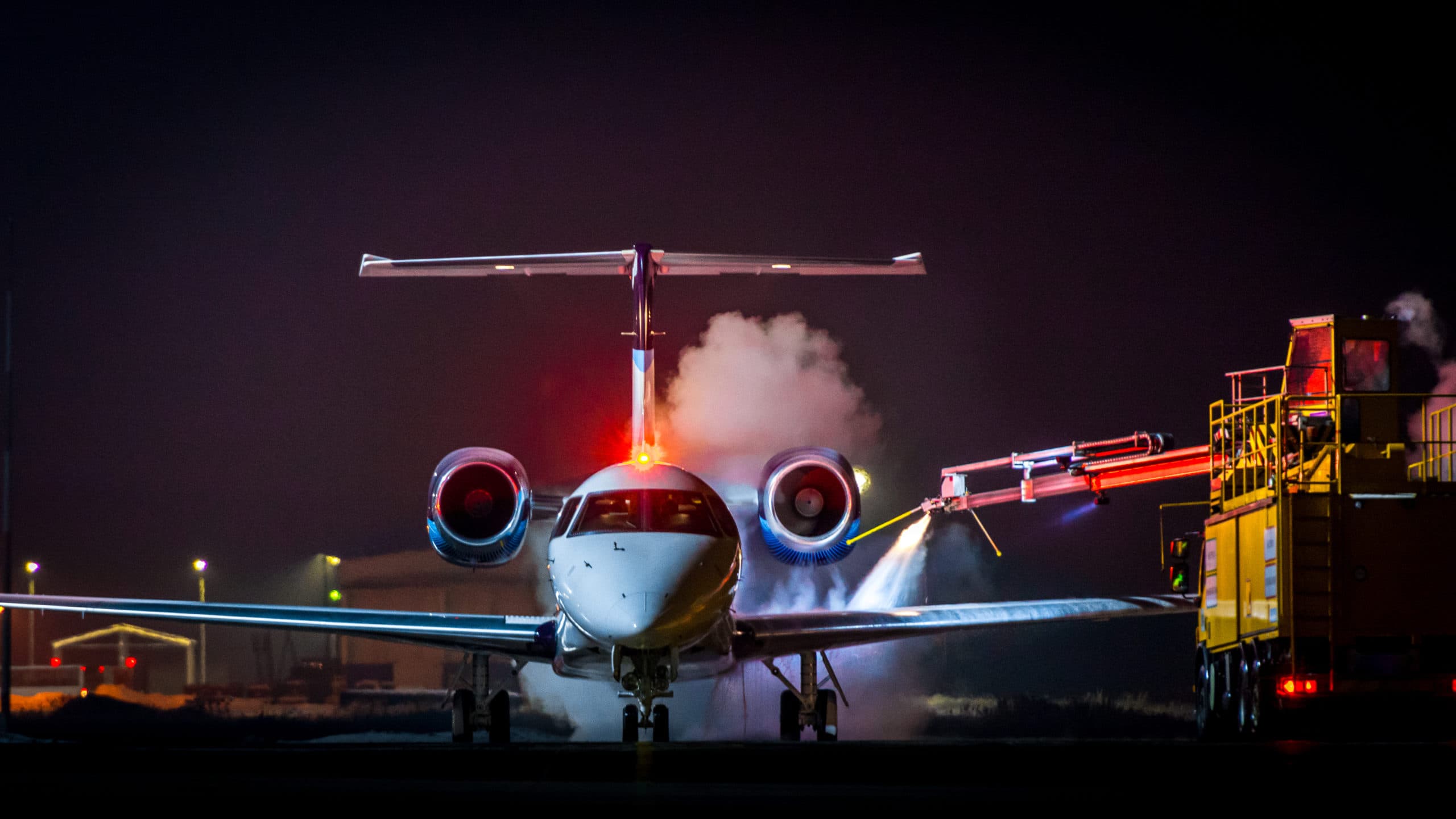
Specialized airport vehicles spray heated fluid (a mixture of water and glycol) onto the aircraft.
There are typically two types of fluids:
Type I: Removes existing contamination
Type IV: Provides temporary anti-icing protection before takeoff
Timing is critical. After de-icing, the aircraft has a limited “holdover time” before takeoff must occur.
De-icing can be significant in cost and varies depending on:
Airport
Aircraft size
Amount of fluid required
Weather severity
Indicative examples:
Light jet in Geneva: approx. €1,500
Large jet: €7,000–€8,000
In severe winter conditions, costs can increase further.

Written by
Founder & CEO
Florent Sériès is the founder and CEO of JetFlo, a Geneva-based, IATA-certified private jet charter brokerage. He has spent his career in business aviation and writes about charter operations, aircraft selection, and sustainable private aviation.
40+ years combined team experience in business aviation · IATA-certified brokerage
Our Geneva-based team is available 24/7.
New to chartering? Read The Complete Guide to Private Jet Charter.