
The World's Leading Manufacturers
Our independence means we source from every major manufacturer. Explore the brands and let us match the perfect aircraft to your mission.
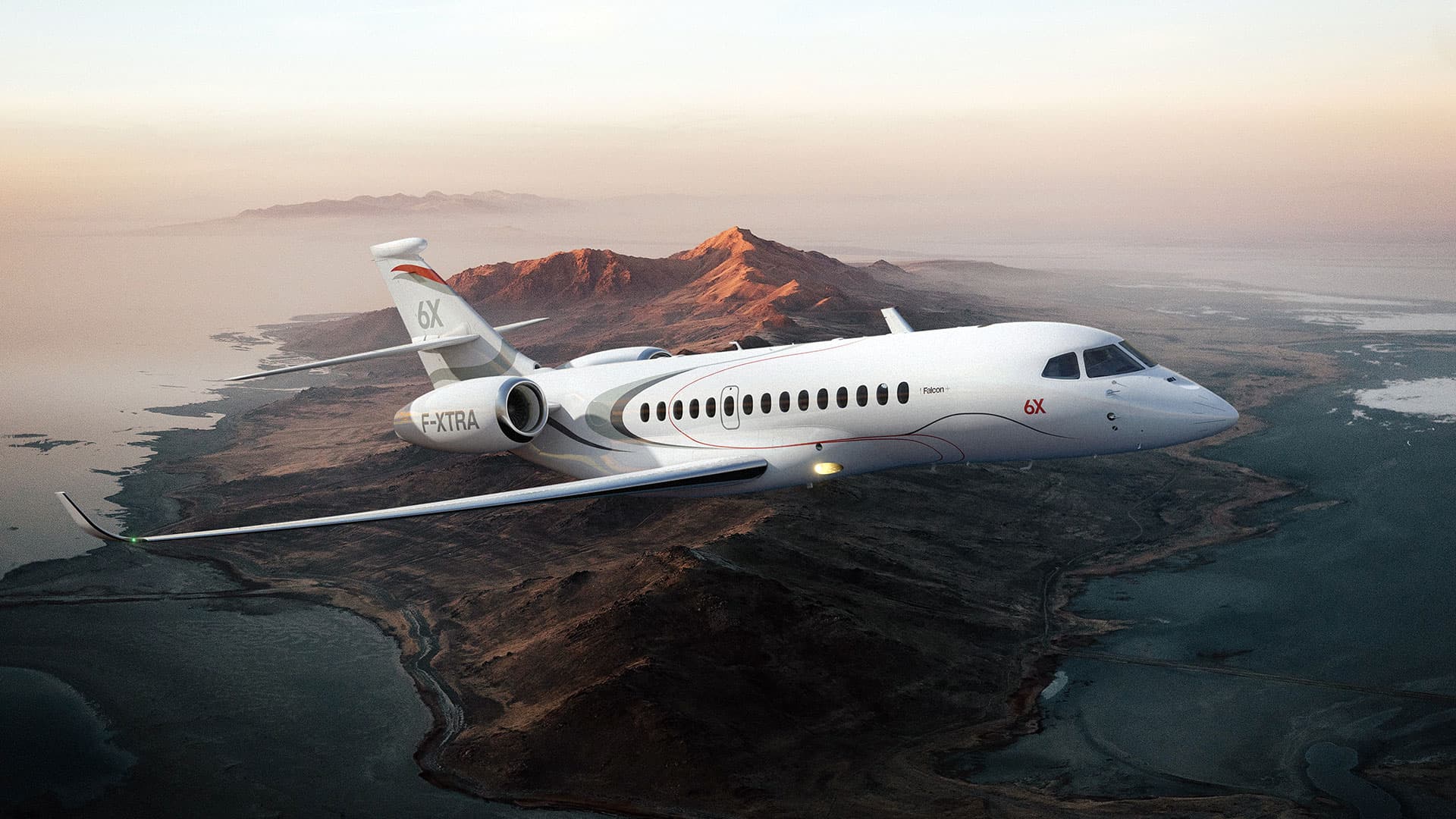
Dassault Aviation
French excellence in military and civil aviation
Dassault Aviation, headquartered in Saint-Cloud, France, is a global symbol of technological excellence, craftsmanship, and innovation in both defense and business aviation. Founded in 1929 by Marcel Dassault, the company has built a reputation for engineering precision and avant-garde design. While Dassault first gained renown through its fighter aircraft for the French military — including the Mirage and Rafale — its Falcon business jet division has become a cornerstone of the company's identity, delivering aircraft that combine performance, efficiency, and refined elegance. The Falcon family was inaugurated in 1963 with the Falcon 20, a sleek twin-engine jet that quickly gained international recognition and was even operated by FedEx in its early cargo operations. Over the decades, Dassault has introduced a series of Falcon models — among them the Falcon 50, 900, and 2000 — that established benchmarks for comfort, reliability, and versatility. A defining feature of Dassault's approach is the transfer of advanced military technology into its business jets. Fly-by-wire systems, digital flight controls, and aerodynamic innovations first developed for the Mirage and Rafale fighters have been successfully adapted to Falcons, offering pilots superior control and passengers smoother rides. Dassault jets are renowned for their ability to operate from shorter runways, increasing access to smaller airports and enhancing point-to-point efficiency for executives and corporations. Dassault's current portfolio reflects a blend of tradition and forward-looking innovation. The Falcon 8X offers intercontinental range, unmatched cabin quietness, and extensive customization. The Falcon 6X, entered service in 2025, is the industry's first ultra-widebody business jet, featuring a cabin height of 6.5 feet and a width of 8.6 feet. The flagship Falcon 10X, in development for entry into service in 2027, is expected to redefine the ultra-long-range category with a 7,500-nautical-mile range and an interior rivalling top residences and yachts. Every Falcon aircraft is a product of meticulous French craftsmanship. Dassault combines advanced digital design tools with artisanal expertise, ensuring aircraft meet the highest standards of performance and refinement. With a worldwide service network, Dassault ensures comprehensive support for its global customer base.
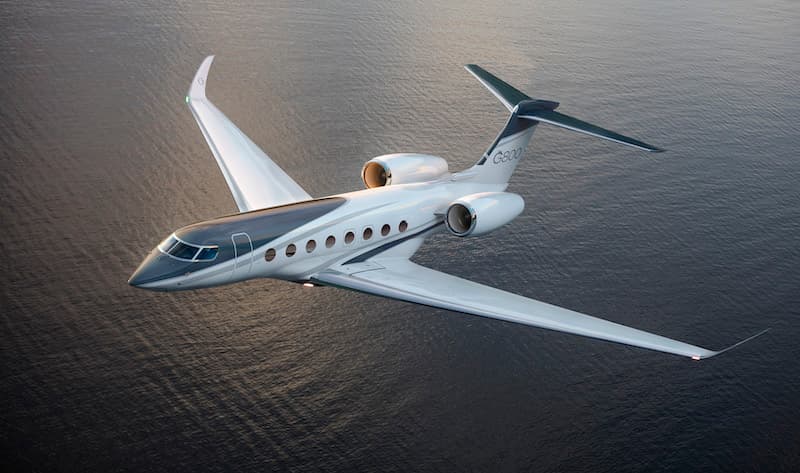
Gulfstream Aerospace
The pinnacle of large-cabin, long-range business aviation
Gulfstream Aerospace, headquartered in Savannah, Georgia, is one of the most prestigious and influential names in the private aviation industry. Founded in the late 1950s, Gulfstream pioneered the concept of large-cabin, long-range business jets and has since become a benchmark for performance, innovation, and luxury in corporate aviation. The company's origins trace back to 1958, when Grumman Aircraft Engineering designed the Gulfstream I (G-I), a twin-turboprop aircraft tailored for business travel. Its success led to the creation of the Gulfstream II (G-II), a pure jet aircraft that entered service in 1967 and effectively launched the modern era of corporate jet aviation. Over the decades, Gulfstream has continually pushed boundaries in speed, range, cabin design, and technology. Gulfstream's aircraft portfolio is divided into large-cabin, long-range jets and ultra-long-range flagships. The company is particularly known for its elegant cabins, which are among the quietest and most spacious in the industry, and its pioneering use of advanced avionics such as the Gulfstream Symmetry Flight Deck with touchscreen controls and enhanced vision systems. The Gulfstream G650 and G650ER, introduced in the 2010s, solidified the company's reputation as a top-tier manufacturer, offering record-breaking range, speed, and comfort. More recently, Gulfstream introduced the next-generation G500 and G600, designed to combine performance with fuel efficiency, and the G700 and G800, which push the limits of intercontinental travel. The G700, entering service in 2024, features the industry's largest cabin, while the G800 is set to become one of the longest-range business jets ever built, capable of 8,000 nautical miles nonstop. Gulfstream has been a leader in sustainability, being the first business jet manufacturer to fly on 100% sustainable aviation fuel (SAF). Its focus on aerodynamic efficiency, advanced engines, and lightweight materials ensures reduced emissions while maintaining high performance. The company has also pioneered health-focused cabin innovations, including 100% fresh air, lower cabin altitudes, and advanced air purification systems.
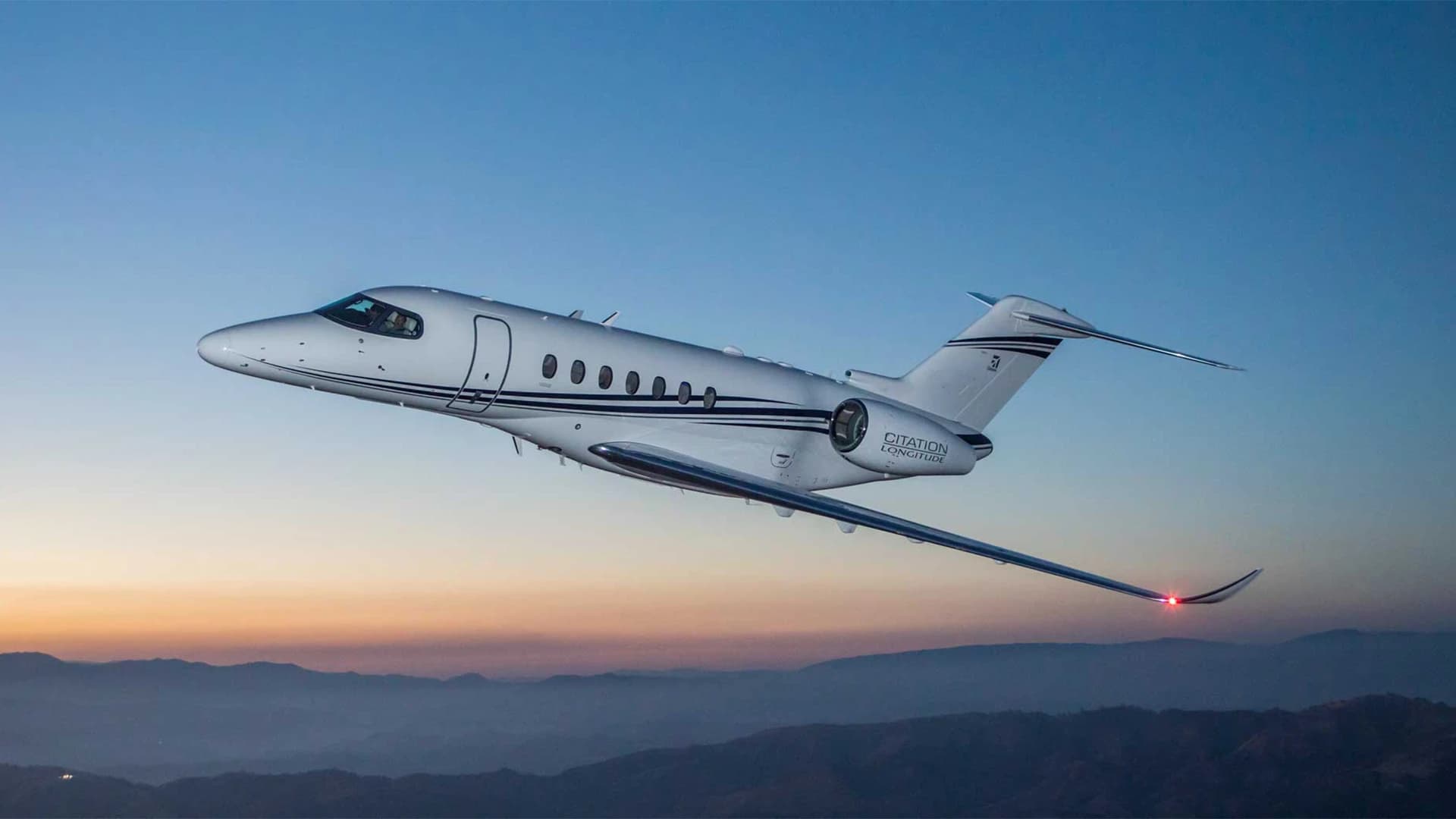
Cessna Citation
The broadest range of business jets in the world
Cessna, a legendary American aircraft manufacturer headquartered in Wichita, Kansas (now part of Textron Aviation), has played a defining role in making private jet travel more accessible, versatile, and efficient. While the company is historically known for its piston and turboprop aircraft, its true transformation of business aviation began with the Citation jet series. Launched in the late 1960s, the Citation family was designed to be smaller, more economical, and easier to operate than larger business jets of the time. The first model, the Citation I, flew in 1969 and entered service in 1972, offering short-field capability and operating costs that allowed smaller companies and entrepreneurs to embrace jet travel for the first time. This approach established Cessna as the pioneer of the light business jet segment, a category it continues to dominate. Unlike competitors that pursued exclusively long-range luxury markets, Cessna focused on efficiency, versatility, and affordability. The Citation line ranges from very light jets (VLJs) to super-midsize and large-cabin aircraft, creating one of the most diverse product families in business aviation. Citations are renowned for their ability to access shorter runways, their straightforward handling, and their wide global support network. The Citation Mustang (2006) opened the door to very light jets, appealing to owner-operators, while the Citation X made headlines as one of the fastest business jets ever built, cruising near Mach 0.92. Today, the latest Citation Longitude and Latitude represent the super-midsize and midsize segments, combining range, advanced avionics, and spacious cabins with Cessna's hallmark operating economics. With more than 30 Citation models produced over five decades, Cessna has delivered over 8,000 jets, making the Citation family the most popular and widely operated fleet in business aviation history. Citations are used by corporations, governments, charter operators, air ambulances, and private individuals.
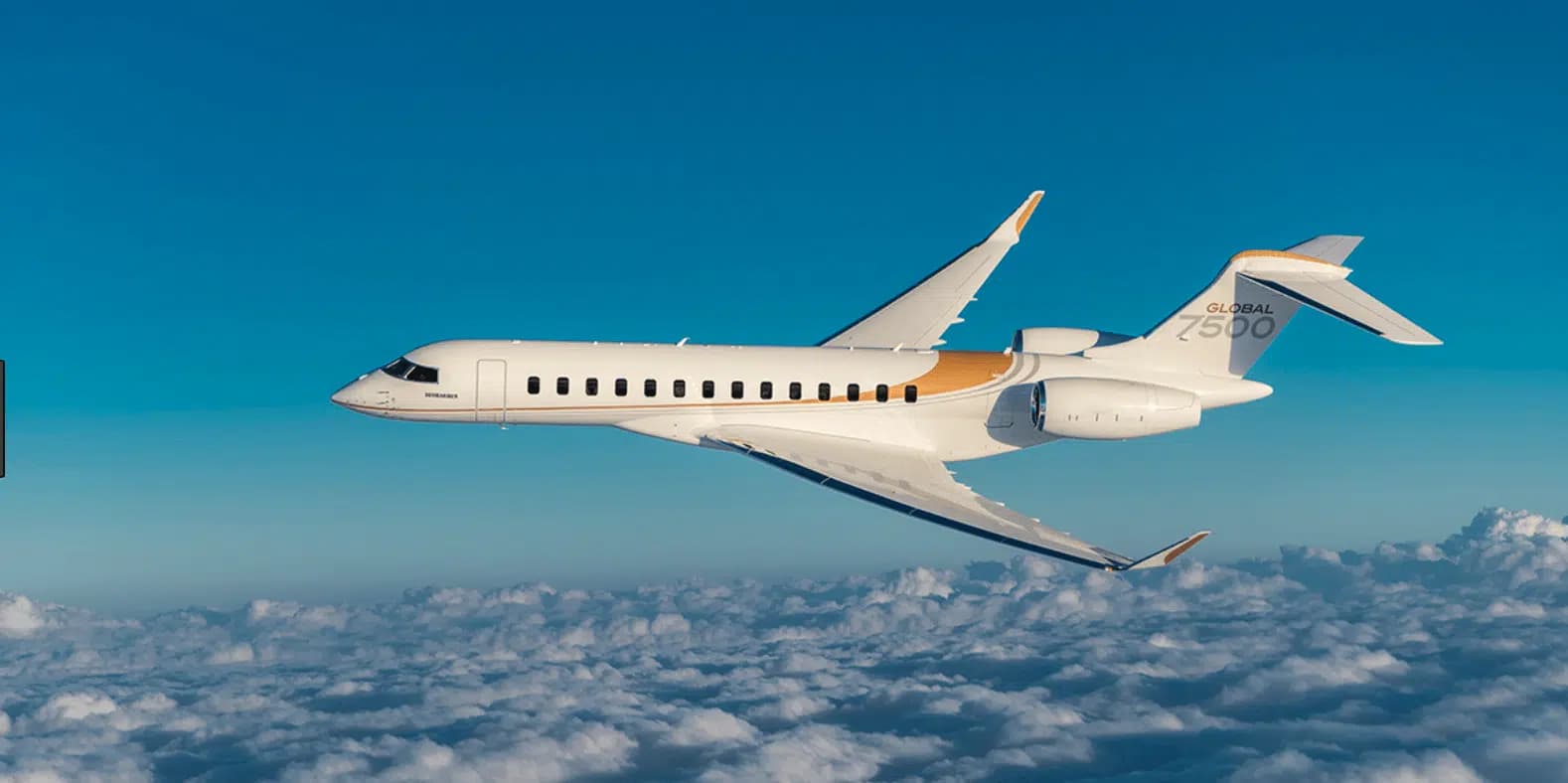
Bombardier
The world's leading business aviation company
Bombardier Inc., headquartered in Montreal, Canada, stands as one of the most influential names in private aviation. From humble beginnings in 1942, when inventor Joseph-Armand Bombardier founded the company to manufacture snowmobiles, Bombardier has continually reinvented itself, moving into aerospace and transportation before ultimately becoming a global leader in business aviation. Today, the company's sole focus is on delivering cutting-edge private jets that combine performance, innovation, and luxury. At the heart of Bombardier's portfolio is the Global family, a line of ultra-long-range business jets that has redefined intercontinental travel. The Global 5500 and 6500 offer efficiency and comfort for demanding executives, while the Global 7500 is celebrated as the longest-range purpose-built business jet in the world, connecting distant city pairs such as New York to Hong Kong nonstop. With its spacious four-zone cabin and advanced Smooth Flĕx Wing design, the Global 7500 set a new benchmark for comfort and range. Building on this success, Bombardier is developing the Global 8000, which will be the fastest and longest-range business jet in history. Designed to reach speeds up to Mach 0.94, the Global 8000 pushes the boundaries of civil aviation, offering not only record-breaking range but also unmatched cabin refinement. Complementing the Global line, the Challenger series occupies a leading position in the super-midsize segment. The Challenger 3500 and 650 are known for their spacious cabins, robust performance, and exceptional reliability — consistently ranking among the world's best-selling business aircraft. Bombardier also holds the heritage of Learjet, the iconic American manufacturer it acquired in 1990. Learjet pioneered the concept of private business aviation in the 1960s, becoming synonymous with speed, prestige, and executive mobility. While Bombardier ended Learjet production in 2022 to concentrate on its Challenger and Global platforms, the Learjet brand remains a cornerstone of aviation history and a proud chapter in Bombardier's legacy.
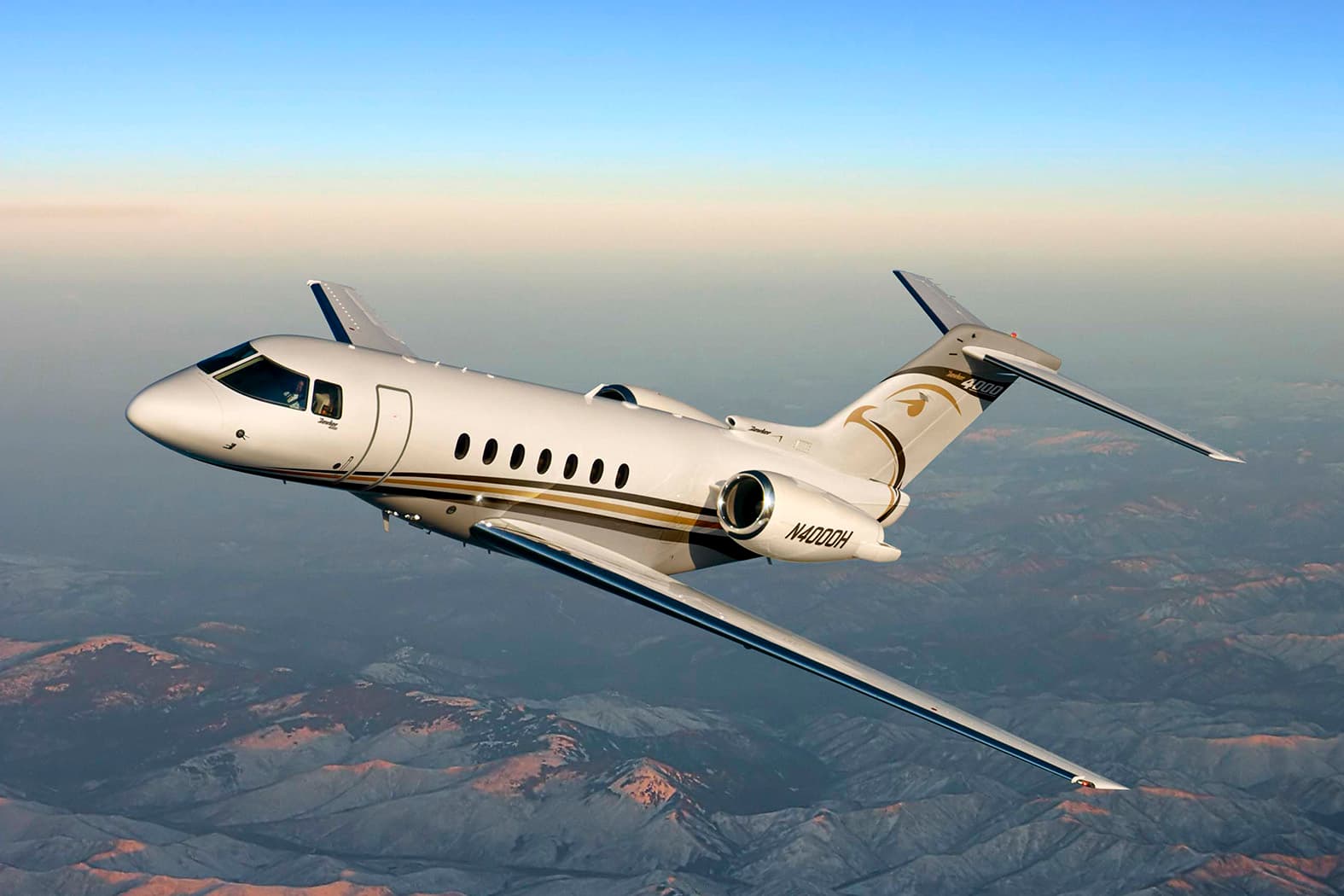
Hawker
British heritage, proven reliability
The Hawker business jet lineage is one of the most storied in private aviation. Originally developed in the United Kingdom by de Havilland in the 1960s, the aircraft that would become the "Hawker" was later produced under Hawker Siddeley, then British Aerospace (BAe), before being acquired by Raytheon in the 1990s. Under Raytheon and subsequently Hawker Beechcraft, the Hawker name grew into one of the best-known midsize business jet families in the world. The first model, the de Havilland DH.125 Jet Dragon, made its maiden flight in 1962. It was a small twinjet designed for efficiency and comfort, tailored to a growing market of executives seeking fast, flexible transport. After de Havilland's acquisition by Hawker Siddeley, the aircraft became known as the HS.125, and quickly gained popularity in both corporate and military service. Over the decades, the jet was progressively updated with new avionics, engines, and interiors, eventually evolving into the Hawker 700, 800, and 1000 series, which became synonymous with midsize corporate aviation. These aircraft were widely used by corporations, charter operators, and governments worldwide due to their reliability, spacious cabins, and ability to operate into shorter runways than many competitors. In the 2000s, Hawker Beechcraft modernized the lineup with the Hawker 750, 850XP, and 900XP, offering improved performance, extended range, and cabin refinements. The Hawker 4000, a super-midsize jet with composite fuselage technology, was launched as the most advanced Hawker ever built. Despite technological innovation, financial difficulties led Hawker Beechcraft into bankruptcy in 2012, after which Textron Aviation took over, discontinuing the Hawker line to focus on Beechcraft King Air turboprops and Cessna Citation jets. Though no longer in production, thousands of Hawker jets remain in service globally, supported by Textron Aviation's maintenance network. Their enduring reputation for comfort, efficiency, and reliability has secured Hawker's place in business aviation history.
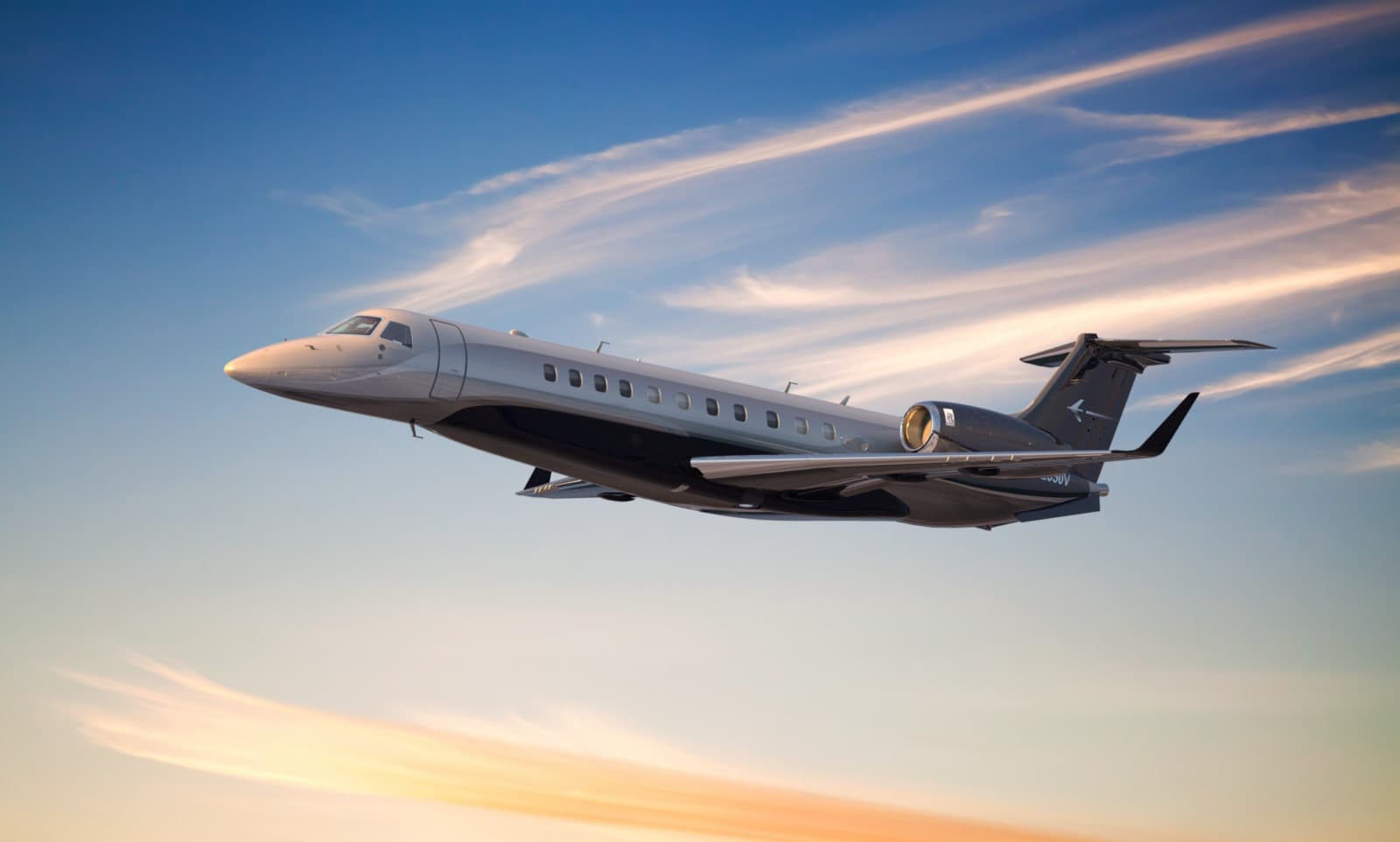
Embraer Executive Jets
Innovation from Brazil to the world
Embraer, founded in 1969 in São José dos Campos, Brazil, is one of the world's largest aircraft manufacturers. While globally recognized for its regional airliners and military aircraft, Embraer has also become a major force in business aviation, offering a modern portfolio of jets that combine efficiency, advanced technology, and passenger comfort. Embraer entered the business jet market in the early 2000s with a clear strategy: to leverage its expertise in regional aircraft to design cost-efficient, comfortable, and reliable private jets across multiple categories. Its Phenom, Praetor, and Legacy/Lineage families now cover everything from the very light jet (VLJ) segment to ultra-long-range executive travel, making Embraer one of the most versatile players in the industry. The Phenom 100, introduced in 2008, marked Embraer's debut in the private jet market. It quickly gained recognition as one of the most successful very light jets, thanks to its spacious cabin, advanced avionics, and low operating costs. The Phenom 300, launched in 2009, became the best-selling light jet in the world for over a decade, combining speed, range, and performance with the ability to operate from shorter runways. Building on its regional jet platforms, Embraer developed the Legacy 600 (based on the ERJ-135) in 2002, offering a super-midsize cabin and long-range capabilities. This was followed by the Legacy 650 in 2010 with greater range and improved cabin comfort. In 2009, Embraer introduced the Lineage 1000, a luxurious ultra-large business jet derived from the E190 airliner, capable of intercontinental flights with a five-zone cabin. In 2018, Embraer unveiled the Praetor 500 and 600, upgraded versions of the Legacy 450 and 500. These aircraft offer class-leading range, state-of-the-art avionics, and exceptional cabin comfort with flat floors and low cabin altitudes. The Praetor 600 in particular competes directly with established super-midsize leaders like the Challenger 3500 and Gulfstream G280. With a strong global service network and a growing reputation for reliability and value, Embraer has established itself as the fourth major manufacturer in business aviation, alongside Bombardier, Dassault, and Gulfstream.
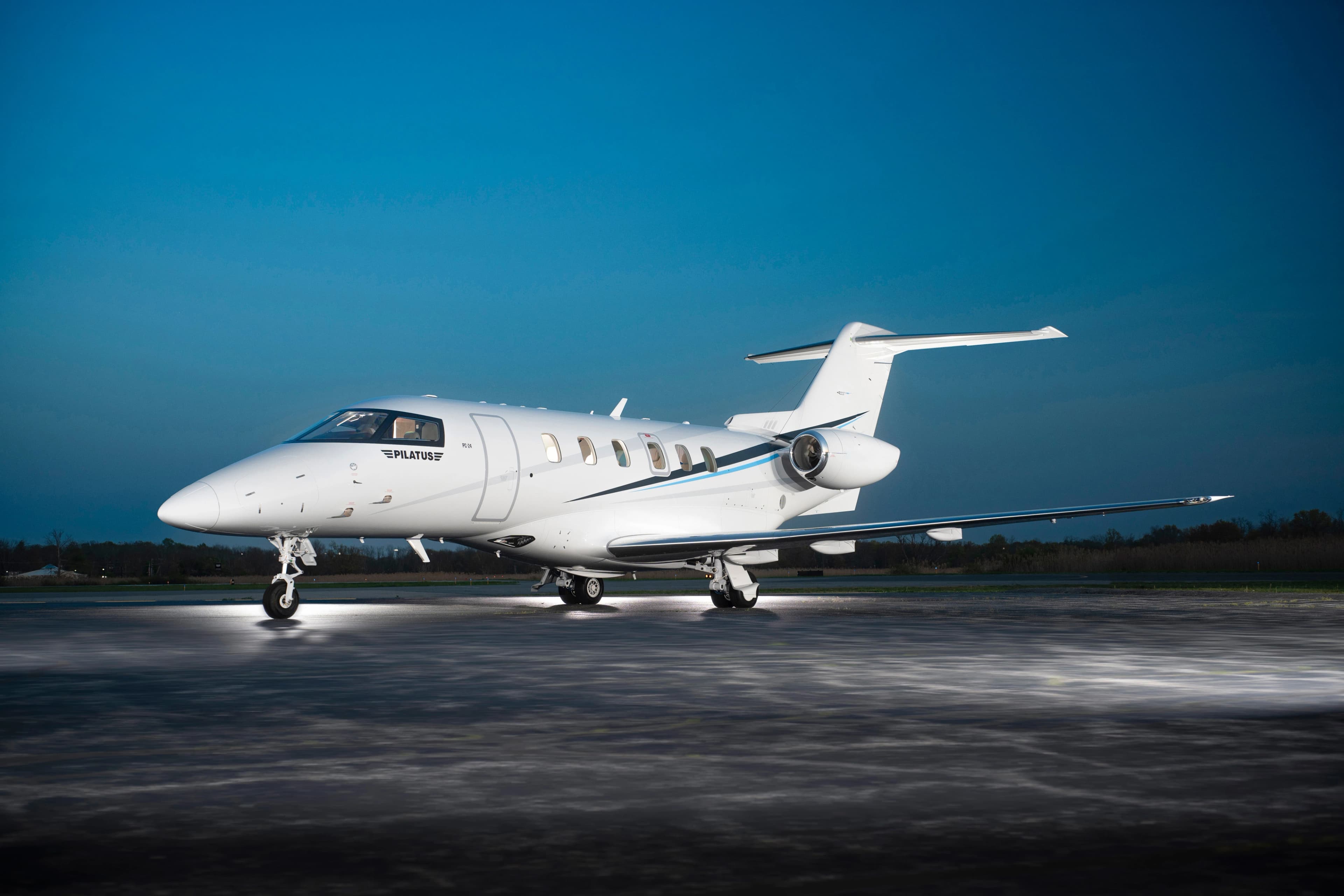
Pilatus
Swiss precision. Unmatched versatility.
Pilatus Aircraft Ltd., headquartered in Stans, Switzerland, is world-renowned for its high-quality turboprop aircraft such as the PC-12, which has become one of the most versatile and successful business aircraft ever built. While traditionally focused on turboprops and military trainers, Pilatus made a bold entry into the business jet market in the 2010s with the development of the PC-24, a unique "Super Versatile Jet" that combines jet performance with the rugged flexibility of a turboprop. Founded in 1939, Pilatus built its reputation on Swiss engineering excellence, durability, and adaptability. The PC-12, introduced in 1991, set the stage by proving that an aircraft could deliver both executive comfort and utility in demanding environments. Building on this heritage, Pilatus envisioned a jet that would retain the short-field, unpaved-runway capability of the PC-12 while offering the speed and range of a light jet. The Pilatus PC-24, launched in 2013 and certified in 2017, is the world's first Super Versatile Jet (SVJ). Unlike traditional business jets that are restricted to paved runways, the PC-24 is certified for operations from grass, dirt, gravel, and even snow runways, giving it unmatched operational flexibility. With a range of about 2,000 nautical miles, seating for up to 10 passengers, and a spacious flat-floor cabin, the PC-24 bridges the gap between light jets and utility aircraft. Its large cargo door — unique in the light jet category — makes it ideal not only for executive missions but also for medevac, government, and special operations. Pilatus positioned the PC-24 as a niche product within business aviation: a jet capable of operating from more than twice the number of airports accessible to other light jets. This flexibility appeals to private owners, corporations, air ambulance services, and government operators who need a balance of luxury and practicality. Unlike competitors with broad product families, Pilatus maintains a focused strategy: the PC-12 turboprop and the PC-24 jet as complementary products. This unique position allows Pilatus to serve a specific clientele seeking versatility, ruggedness, and reliability without sacrificing executive comfort. The PC-24 embodies Pilatus's ethos: "Swiss Made" precision for a global audience.
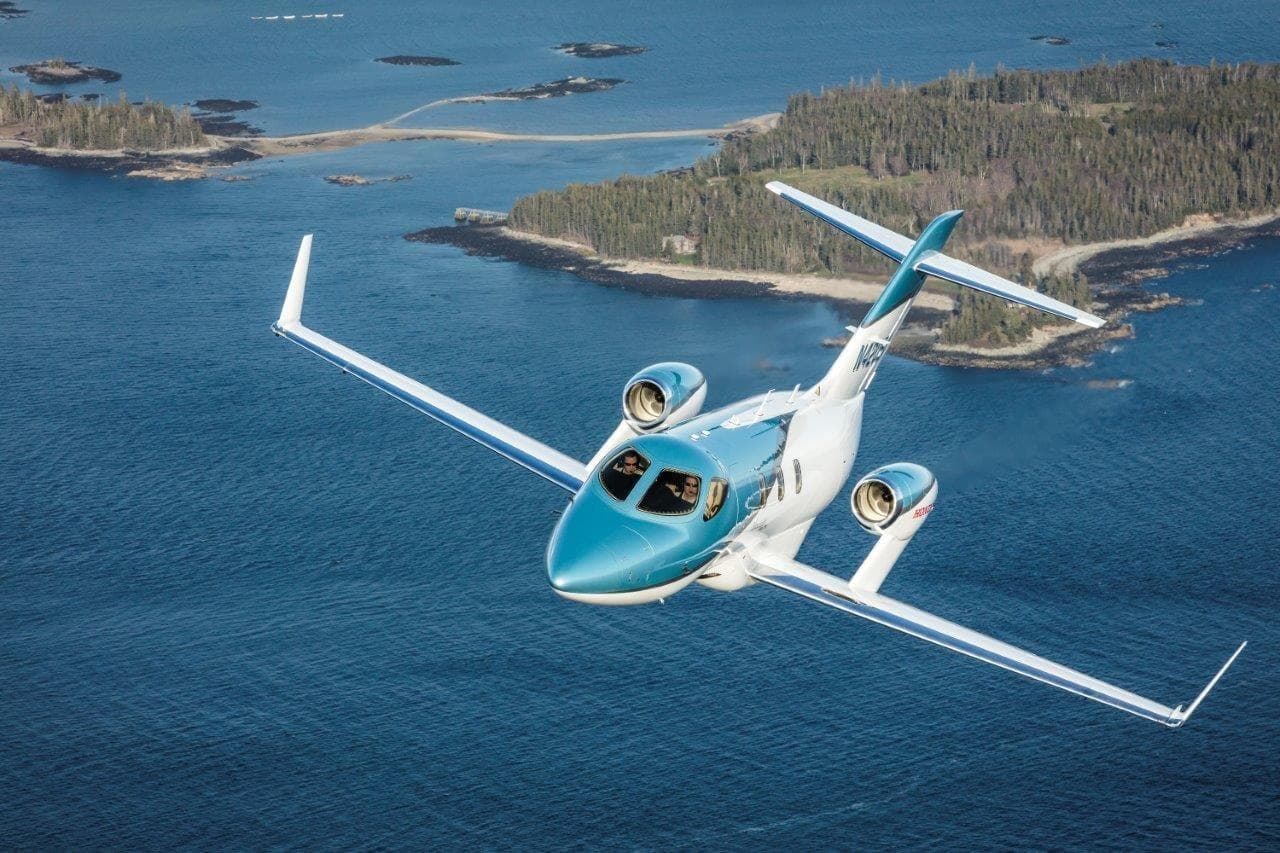
HondaJet
Honda Aircraft Company — designer of the HondaJet light-jet family
Honda Aircraft Company, headquartered in Greensboro, North Carolina, represents one of the most innovative newcomers in modern business aviation. A subsidiary of the Japanese industrial giant Honda Motor Co., the company entered the aviation industry with a bold vision: to rethink the very architecture of the light business jet. The result was the HondaJet, an aircraft that combines advanced aerodynamics, fuel efficiency, and cutting-edge engineering in a category traditionally dominated by established Western manufacturers. The origins of the HondaJet date back to the 1980s, when Honda began researching aviation technologies through internal experimental programs. Under the leadership of engineer Michimasa Fujino, Honda developed a revolutionary design featuring Over-The-Wing Engine Mount (OTWEM) technology. Unlike conventional business jets with rear-mounted engines attached directly to the fuselage, the HondaJet's engines are positioned above the wings, reducing drag, improving fuel efficiency, and significantly increasing cabin space. The HondaJet HA-420, officially launched in the 2000s and certified in 2015, quickly became one of the most successful very light jets (VLJs) in the world. It combines impressive speed, advanced avionics, and low operating costs with a spacious cabin and refined interior. The aircraft's composite fuselage and natural laminar flow wing further contribute to fuel efficiency and reduced emissions. Honda continued to evolve the platform with the HondaJet Elite in 2018, introducing improved range, quieter cabins, upgraded avionics, and enhanced performance. In 2021, the company unveiled the HondaJet Elite S, offering increased maximum takeoff weight, extended range, and new operational capabilities. Most recently, Honda Aircraft announced the development of the HondaJet Echelon, a larger light jet aimed at transcontinental missions, marking the company's ambition to expand into higher segments of business aviation. Honda Aircraft places strong emphasis on sustainability and operational efficiency. The HondaJet is recognized as one of the most fuel-efficient aircraft in its class, while the company continues investing in advanced materials, aerodynamic innovation, and future technologies. Though relatively new to aviation compared to legacy manufacturers, Honda has established itself as a serious competitor by challenging conventional design philosophies. The HondaJet embodies Japanese precision, technological innovation, and a forward-thinking approach that has reshaped expectations in the light jet market.
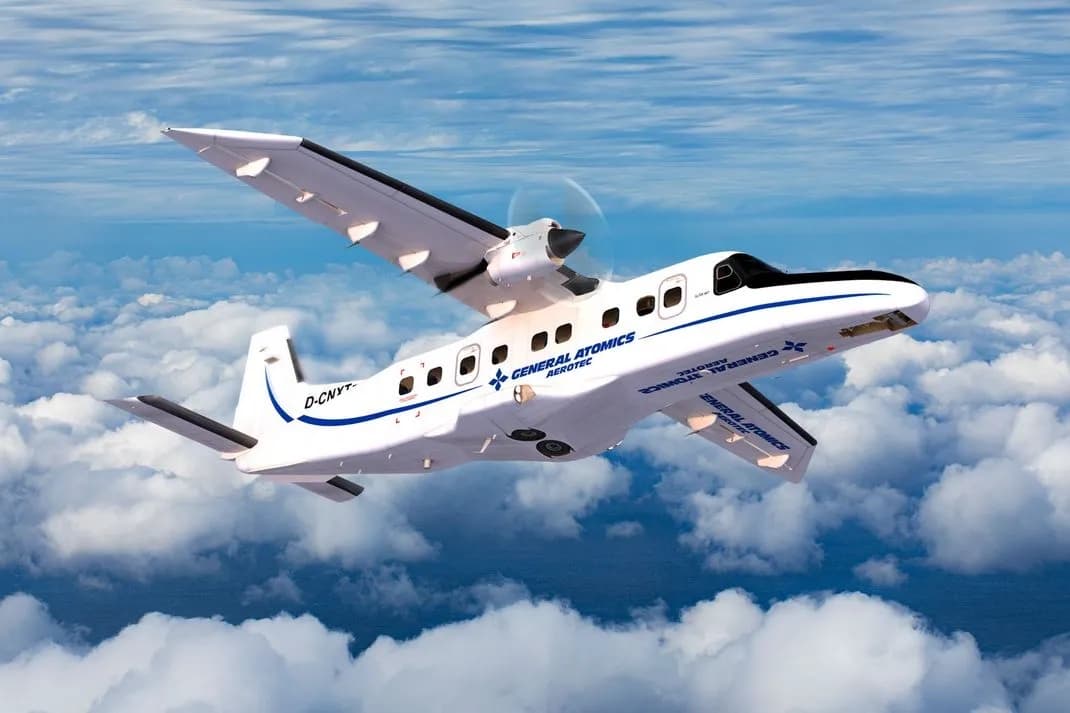
Dornier
Legacy German manufacturer best known for the 328 regional turboprop
Dornier is one of Germany's most historic aerospace manufacturers, known primarily for its innovative regional aircraft and military aviation programs. Founded by Claude Dornier in 1914, the company gained worldwide recognition for pioneering all-metal aircraft construction and advanced aerodynamic concepts. While Dornier was never a major player in traditional business aviation like Gulfstream or Dassault, several of its aircraft significantly influenced the executive and corporate transport market. The company became particularly well known in the postwar era for its versatile turboprop and regional jet aircraft. The Dornier 228, introduced in the early 1980s, earned a reputation for rugged reliability, short-field performance, and operational flexibility. Though mainly designed for commuter and utility missions, it also found success in government, VIP, and corporate transport roles. Dornier's most ambitious program came in the 1990s with the Dornier 328, a regional aircraft developed in both turboprop and jet variants. The Dornier 328JET, introduced in 1999, featured a spacious stand-up cabin, excellent short-runway capabilities, and jet performance ideally suited for regional corporate travel and executive shuttle missions. Its quiet cabin and operational efficiency made it attractive to corporations and specialized operators seeking alternatives to traditional business jets. Although Dornier faced financial challenges and eventually ceased independent aircraft production in the early 2000s, the Dornier legacy remains highly respected in aviation circles. The Dornier 328 program continues today under Deutsche Aircraft, which is developing modernized versions of the platform. Dornier aircraft are still appreciated for their German engineering, robust construction, and operational versatility. Their ability to combine reliability with excellent short-field performance made them particularly valuable for operators needing access to smaller or remote airports.
Need expert guidance?
Our team has deep relationships across every manufacturer. We'll find the right aircraft for your mission.