June 27, 2026

By Florent Sériès · Founder & CEO
June 27, 2026 · Updated Aug 3, 2026
Few aircraft have had the impact of the Pilatus PC-12.
Since entering service in the mid-1990s, the Swiss-built turboprop has earned a reputation that very few aircraft can match. It's equally at home transporting executives between European business centres, landing on short alpine runways, carrying medical teams into remote regions or operating as a special-mission aircraft for governments around the world.
What makes the PC-12 unique is that Pilatus never tried to reinvent it.
Instead, the company spent more than thirty years refining the same formula: a spacious pressurized cabin, exceptional operating flexibility, impressive range and the reliability of the Pratt & Whitney PT6 turboprop engine.
The result is a rare success story in aviation. Each generation of the PC-12 improved the aircraft without changing the qualities that made it successful in the first place.
When the first PC-12 entered service in 1994, the concept was surprisingly ambitious.
Pilatus wanted to create an aircraft that combined the operating costs of a turboprop with the comfort and capability normally associated with larger business aircraft. The aircraft featured a large cargo door, a fully pressurized cabin and the ability to operate from short or unpaved runways.
At the time, many operators were still reluctant to embrace single-engine aircraft for business aviation. Pilatus had confidence in the proven PT6 engine and focused heavily on safety, reliability and practicality.
Over time, the market responded.
Owners discovered they could fly directly into airports that were inaccessible or uneconomical for many light jets while carrying passengers, luggage, skis, golf bags or cargo in the same aircraft.
For European operators, routes such as Geneva to Ibiza, Geneva to Mykonos or Geneva to Marrakech became ideal PC-12 missions.
The early PC-12 models, including the PC-12/45 and later the PC-12/47, gradually received performance improvements, higher maximum takeoff weights and cabin refinements.
These weren't headline-grabbing changes, but they helped establish the aircraft's reputation for reliability.
During this period, the PC-12 became particularly popular with owner-pilots, charter operators and air ambulance services. It offered a level of versatility that few competitors could match.
By the early 2000s, the aircraft had already become one of the most successful single-engine turboprops ever produced.
The next major milestone came with the introduction of the PC-12 NG, short for “Next Generation.”
This was arguably the first major transformation of the aircraft.
Pilatus introduced a more powerful PT6A-67P engine and replaced the traditional cockpit with the Honeywell Primus Apex glass flight deck. Cruise speed improved, climb performance increased and pilots gained access to a far more modern operating environment.
For passengers, the changes were less visible.
For pilots, however, the NG represented a significant step forward.
The aircraft remained unmistakably a PC-12, but it now felt like a modern business aircraft rather than an evolution of a 1990s design.
In 2019, Pilatus unveiled what many consider the biggest leap in the aircraft's history: the PC-12 NGX.
The NGX wasn't simply about performance. It was about experience.
Pilatus introduced the Pratt & Whitney PT6E-67XP engine with full digital engine control, making power management simpler and more precise. Cruise speed increased to around 290 knots, maintenance intervals were extended and cabin noise was reduced.
More importantly, the aircraft borrowed ideas directly from the Pilatus PC-24 jet.
The cabin received larger windows, redesigned seating and a more premium interior. For many owners, the NGX felt less like a utility aircraft and more like a true executive transport.
This is the version that significantly expanded the PC-12's appeal among private owners and corporate flight departments.
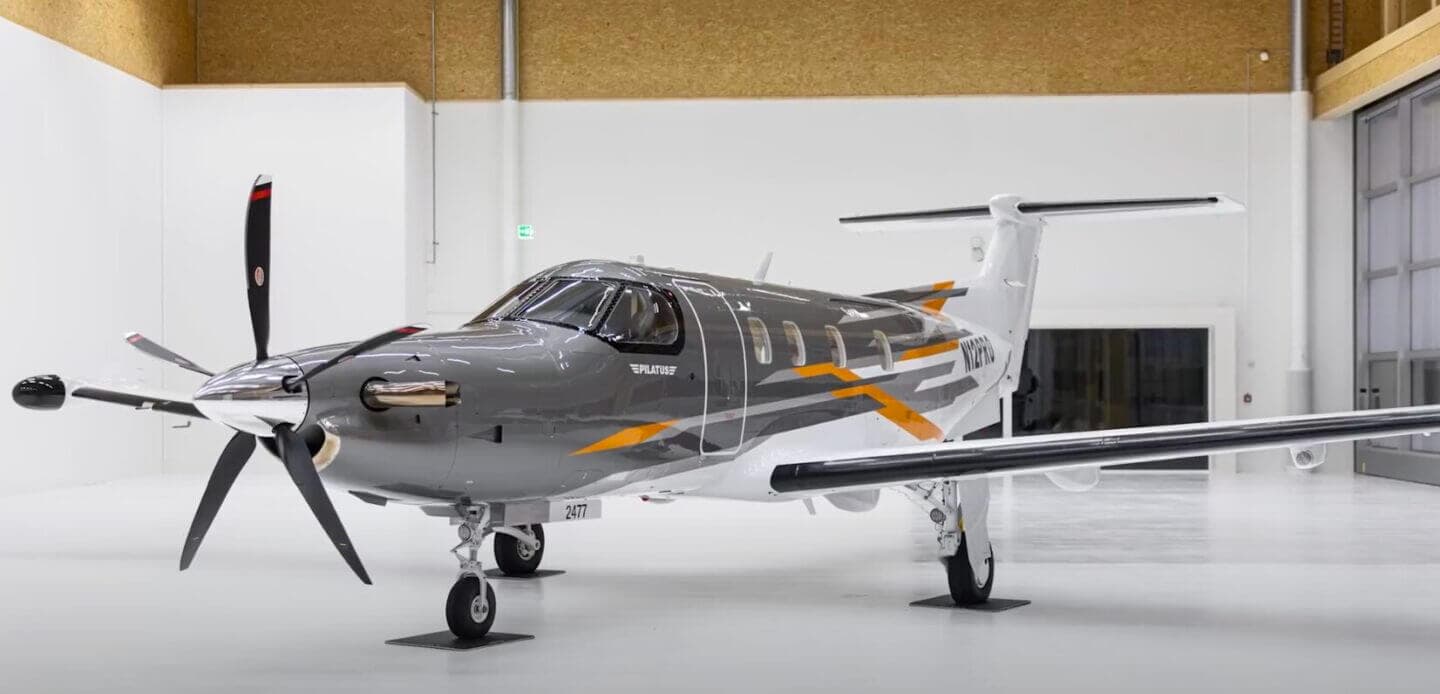
In 2025, Pilatus introduced the PC-12 PRO, the latest chapter in the aircraft's evolution.
Interestingly, Pilatus did not focus on dramatically increasing speed or range.
Instead, the company concentrated on technology, safety and pilot experience.
The most obvious change is the completely redesigned cockpit built around Garmin's new G3000 PRIME avionics platform. Large high-resolution touchscreens, faster processing power and a cleaner cockpit layout bring the PC-12 into a new generation of flight deck design.
The introduction of Garmin Autoland is perhaps even more significant.
In an emergency, the aircraft can automatically land itself if the pilot becomes incapacitated. Combined with features such as Electronic Stability Protection and Smart Glide, the PRO pushes safety standards in the single-engine turboprop category to a new level.
Pilatus also redesigned the cabin with new materials, updated storage solutions and a more contemporary interior inspired by the company's latest aircraft.
What is remarkable about the PC-12 is not how much it has changed, but how consistent its philosophy has remained.
Most aircraft eventually become larger, faster or more complex in an attempt to stay competitive.
Pilatus took a different approach.
The company kept improving the areas that mattered most: reliability, usability, comfort and operating flexibility.
Today, a PC-12 can still land on runways that many business jets would never consider, while offering a cabin capable of carrying executives in comfort across Europe, the Middle East and beyond.
For a departure out of Geneva, that could mean a morning flight to London, an afternoon meeting in Athens or a nonstop trip to Dubai with remarkable efficiency.
From the original PC-12 to the latest PC-12 PRO, the aircraft has evolved from a practical utility turboprop into one of the most respected business aviation platforms in the world.
Each generation has added new technology, improved performance and enhanced comfort without losing the versatility that made the aircraft famous.
That balance is precisely why, more than thirty years after its first flight, the PC-12 remains the benchmark in its category.
And with the arrival of the PC-12 PRO, Pilatus appears determined to keep it that way for many years to come.

Written by
Founder & CEO
Florent Sériès is the founder and CEO of JetFlo, a Geneva-based, IATA-certified private jet charter brokerage. He has spent his career in business aviation and writes about charter operations, aircraft selection, and sustainable private aviation.
40+ years combined team experience in business aviation · IATA-certified brokerage
Our Geneva-based team is available 24/7.
New to chartering? Read The Complete Guide to Private Jet Charter.