June 27, 2026

By Florent Sériès · Founder & CEO
June 27, 2026 · Updated Aug 3, 2026
When Bombardier launched the Global 7500, it quickly became one of the most sought-after business jets in the world. With its spacious four-zone cabin, exceptional range and impressive comfort, it set a new benchmark for ultra-long-range private travel.
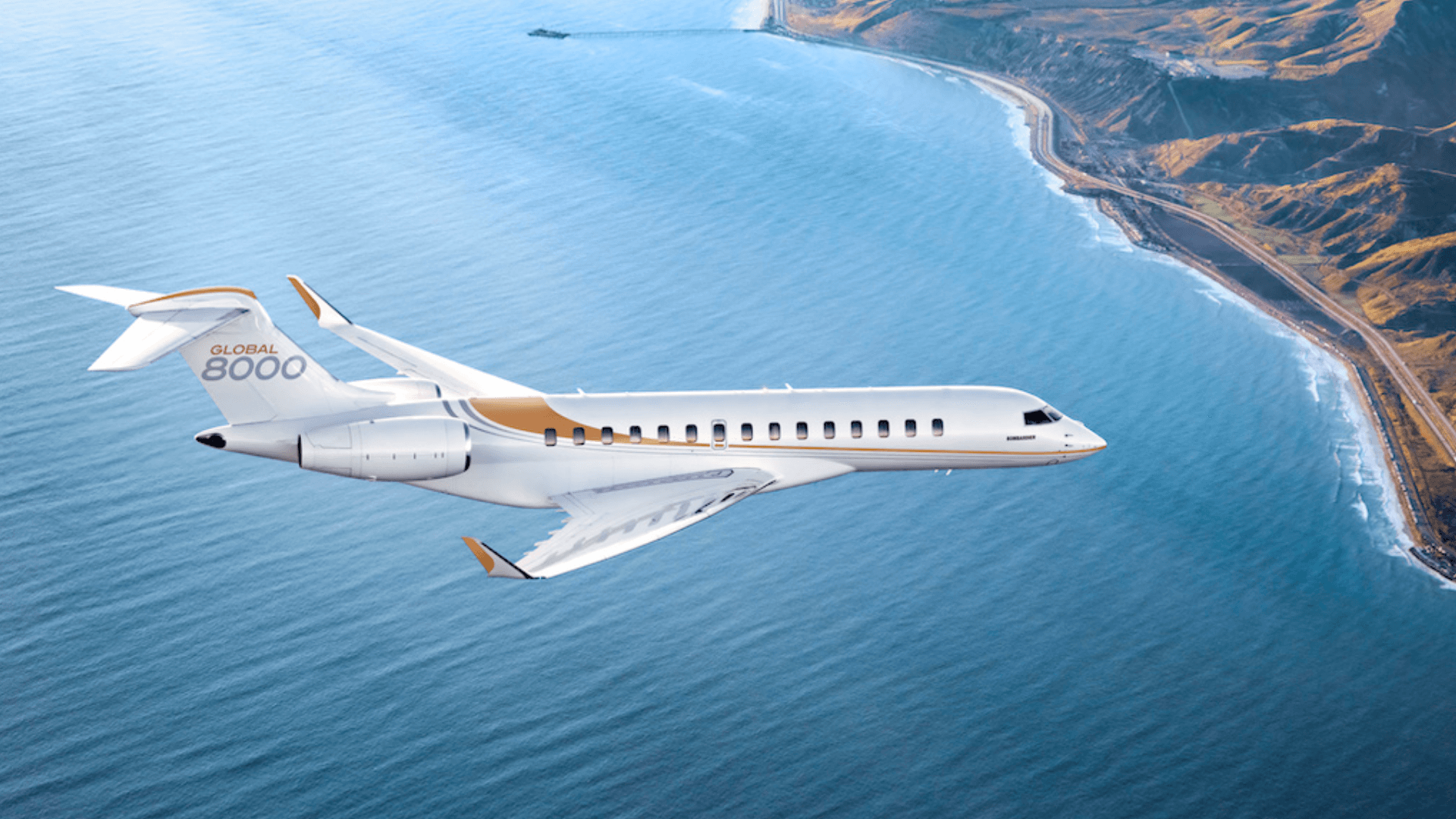
A few years later, Bombardier announced the Global 8000. At first glance, the two aircraft look almost identical. They share the same cabin dimensions, the same general design and the same commitment to passenger comfort.
So what exactly has changed?
The answer lies in performance. The Global 8000 takes everything that made the Global 7500 successful and pushes it a little further, offering more range, higher speed and an even more comfortable cabin environment for long-haul flights.
The Global 7500 can fly up to 7,700 nautical miles nonstop, already enough to connect most major business centres around the world without refuelling.
The Global 8000 extends that capability to 8,000 nautical miles.
On paper, an extra 300 nautical miles may not sound dramatic, but in practice it gives operators more flexibility when dealing with strong headwinds, routing restrictions or challenging weather conditions.
This additional capability enables even more nonstop city pairs, including:
For travellers departing Switzerland, this means missions such as Geneva to Singapore or Geneva to Los Angeles can be completed with even greater confidence and payload flexibility.
For some operators, the additional range can also make the difference between flying a route nonstop or scheduling a fuel stop.
Speed is another area where Bombardier has pushed the limits.
The Global 7500 has a maximum operating speed of Mach 0.925, making it one of the fastest business jets currently flying.
The Global 8000 raises that figure to Mach 0.94, which will make it the fastest civil aircraft in service since the Concorde era.
For passengers, this doesn't necessarily translate into dramatically shorter journeys, but on a flight from Geneva to Los Angeles or Geneva to Tokyo, every minute saved matters. For executives trying to maximise productivity and minimise travel time, the advantage is real.
Perhaps the most meaningful improvement is one passengers may never actually see.
The Global 8000 maintains a cabin altitude of just 2,900 feet, compared with approximately 5,680 feet on the Global 7500.
Lower cabin altitude generally means passengers arrive feeling more refreshed after long flights. Fatigue, dehydration and jet lag can all be reduced, particularly on overnight sectors.
For travellers regularly flying between Geneva and destinations such as Singapore, Hong Kong or the US West Coast, this can make a noticeable difference upon arrival.
One thing that hasn't changed is the cabin itself.
Both aircraft offer Bombardier's award-winning four-zone layout, providing dedicated areas for dining, meetings, relaxation and sleeping.
Large windows, excellent natural light, a quiet cabin and unrestricted access to baggage during flight remain key advantages over many competing aircraft.
For charter clients, the onboard experience is virtually identical. Both aircraft deliver a level of comfort that few competitors can match.
The Global 7500 remains one of the most capable business jets ever built and continues to be highly sought after on the charter market.
The Global 8000 simply takes that proven platform and improves it.
If your priority is having the longest range, the fastest speed and the most advanced cabin environment available today, the Global 8000 represents the pinnacle of business aviation.
If you're flying on a Global 7500, however, you're already travelling aboard one of the finest private jets ever produced.
The reality is that both aircraft sit at the very top of the market. The Global 8000 isn't a revolution; it's the next step in the evolution of an already exceptional aircraft.

Written by
Founder & CEO
Florent Sériès is the founder and CEO of JetFlo, a Geneva-based, IATA-certified private jet charter brokerage. He has spent his career in business aviation and writes about charter operations, aircraft selection, and sustainable private aviation.
40+ years combined team experience in business aviation · IATA-certified brokerage
Our Geneva-based team is available 24/7.
New to chartering? Read The Complete Guide to Private Jet Charter.